
I stumbled onto the word “ulieden” while reading an old Dutch Bible translation, and honestly, I stopped scrolling. It looked like a typo. It’s not. The ulieden meaning is actually pretty simple once you dig in: it’s an old-fashioned way of saying “you” (plural) in Dutch.
If you’ve ever seen this word in a 17th-century letter, an old poem, or a dusty church record and wondered what on earth it means, you’re in good company. I did the digging so you don’t have to.
In this post, I’ll break down where “ulieden” came from, what it actually means, whether Dutch speakers still use it, and how you can spot it (and understand it) if you ever run into it again.
What Does Ulieden Actually Mean?
Let’s start with the basics. “Ulieden” is an archaic Dutch pronoun. It means “you” — but specifically the plural “you,” like “you all” or “y’all” in English.
Think about how English used to have “thou” for one person and “ye” for a group. Dutch had a similar split. “Ulieden” filled that group role, and it carried a formal, almost ceremonial weight.
The word actually breaks down into two parts: “u” (a form of “you”) and “lieden” (meaning “people” or “folk”). Put together, it basically meant “you people” — but in a respectful, elevated sense, not a rude one.
Where the Word Comes From
Dutch used to have a whole system of formal and informal address, similar to French “tu” versus “vous.” Over centuries, that system got simpler.
“Ulieden” was part of the more formal, ceremonial branch of that system. You’d see it in legal documents, religious texts, and letters between people who wanted to show respect or social distance.
A Real Example From History
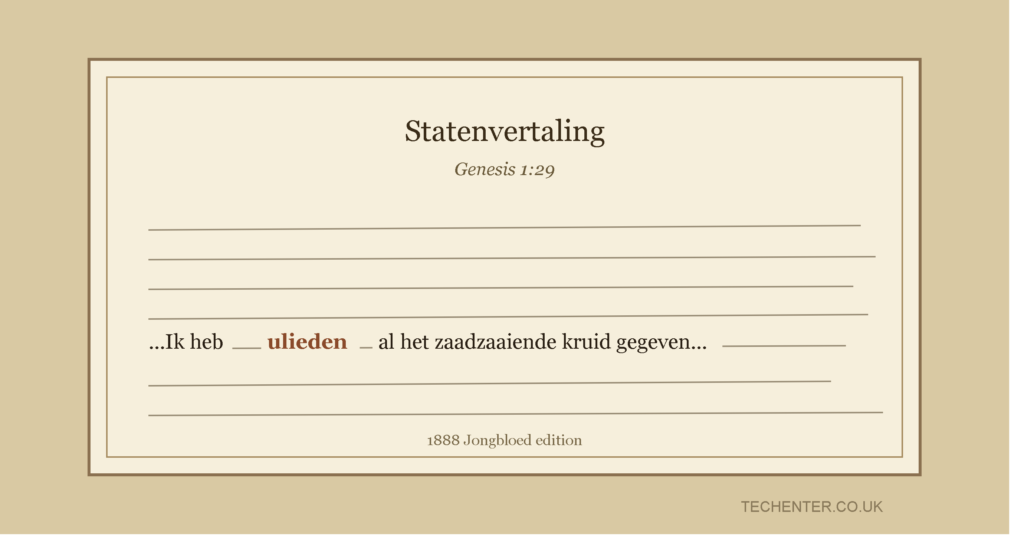
The word shows up a lot in the Statenvertaling, which is the classic 17th-century Dutch Bible translation. For instance, in Genesis, God tells Adam and Eve that he has given “ulieden” every seed-bearing plant <cite index=”2-1″>as recorded in the 1888 Jongbloed edition of the Statenvertaling</cite>.
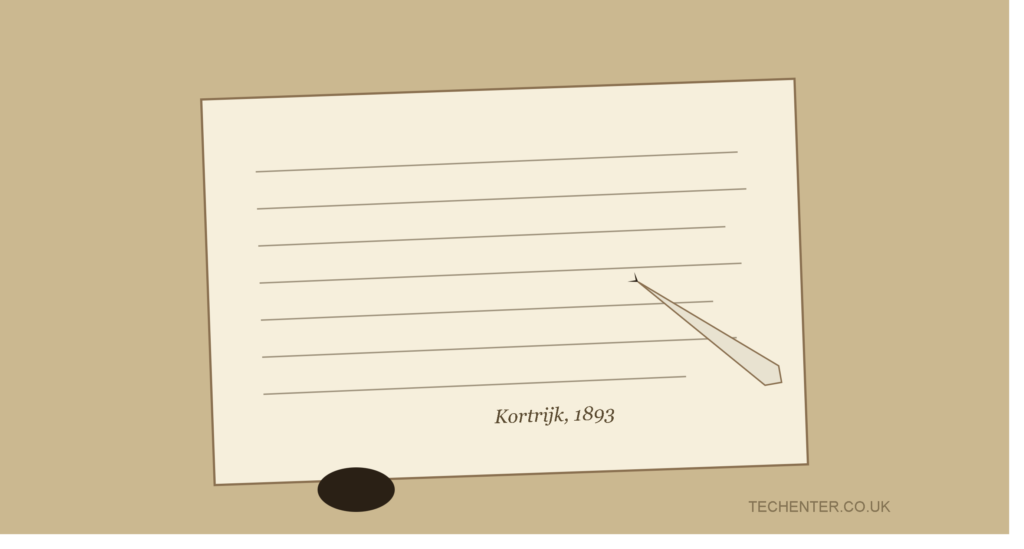
It also turns up in personal letters. The Flemish poet Guido Gezelle used “ulieden” in a letter he wrote in 1893, which tells you the word was still floating around in formal writing well into the 19th century <cite index=”1-1″>even though it had already started to feel old-fashioned by then</cite>.
Is Ulieden Still Used Today?
Short answer: not really, at least not in everyday conversation.
Modern Dutch speakers use much simpler words now:
- Jullie — the standard informal “you all”
- U — the formal singular (and sometimes plural) “you”
- Jullie allemaal — an extra-emphatic “all of you”
If you walked up to someone in Amsterdam today and said “ulieden,” they’d probably laugh, or think you’d just stepped out of a history book. It’s not rude or offensive — it’s just… old. Really old.
I think that’s kind of charming, actually. Languages shed words the way we shed old habits. The ones that stick around usually get simpler, not more complicated. “Ulieden” lost that race a long time ago.
Where You Might Still See It
Even though nobody says it out loud anymore, “ulieden” hasn’t completely vanished. You’ll still bump into it in a few specific places:
- Old Bible translations, especially the Statenvertaling
- Historical letters and manuscripts from the 1600s–1800s
- Academic papers on Dutch linguistics
- Genealogy research, if you’re digging through old family records
- Museum exhibits or archives featuring original Dutch documents
If you’re into genealogy or historical research, this word (and others like it) will pop up more than you’d expect. I’d say treat it like a little linguistic Easter egg — a sign you’re reading something genuinely old.
Why Words Like Ulieden Disappear
This isn’t just a Dutch thing. Every language does this. English used to have “thee,” “thou,” and “ye” before everything got flattened into one all-purpose “you.”
A few reasons words like this fade out:
- Simplicity wins. People naturally drift toward easier, shorter words over time.
- Social hierarchies shift. Formal pronouns often reflected old class or respect systems that don’t map onto modern life the same way.
- Printing and education standardize language. Once spelling and grammar got locked down centuries ago, informal speech patterns started winning out over ceremonial ones.
- Everyday use rewards speed. Texting, chatting, and quick conversation favor short words over elaborate ones.
I find this genuinely fascinating. A word isn’t just vocabulary — it’s a little fossil of how people used to relate to each other. “Ulieden” tells you something about formality and respect in 17th-century Dutch society that a modern word like “jullie” just doesn’t carry anymore.
How to Recognize Similar Archaic Dutch Words
If “ulieden” caught your attention, you’ll probably run into its cousins too. Here’s what to watch for:
- Gij / gijlieden — an older second-person pronoun, singular and plural
- Dijlieden — a rarer archaic plural form
- Ulieder — a possessive form meaning roughly “your” (plural)
If you’re reading an old Dutch document and see a word ending in “-lieden,” there’s a good chance it’s one of these old plural forms. That little suffix is your clue.
A Quick Personal Take
I’ll be honest, I’m not a linguist. I just really like old words. There’s something oddly comforting about finding a word that used to matter so much and now barely exists outside of dusty archives.
It reminds me that language isn’t fixed. It’s alive, messy, and constantly rewriting itself. “Ulieden” had its moment. Now it’s mostly a curiosity for history buffs, genealogists, and word nerds like me.
If you ever want to sound extremely old-fashioned in Dutch, I guess you technically could bust out “ulieden.” Just don’t expect anyone under the age of 300 to know what you mean.
Conclusion
So, what’s the real ulieden meaning? It’s an archaic Dutch word for “you” (plural), rooted in old formal speech patterns, and mostly found today in historical texts, old Bible translations, and genealogy records.
It’s not used in everyday Dutch anymore. Modern speakers say “jullie” instead. But that doesn’t make “ulieden” any less interesting — if anything, it’s a neat little window into how Dutch (and language in general) evolves.
Have you ever come across an old word like this while reading historical documents or doing family research? I’d love to hear about it — drop a comment below, and if you enjoyed this deep dive, share it with a fellow word nerd or subscribe for more posts like this one.
For More Information, please visit:Techenter.co.uk