
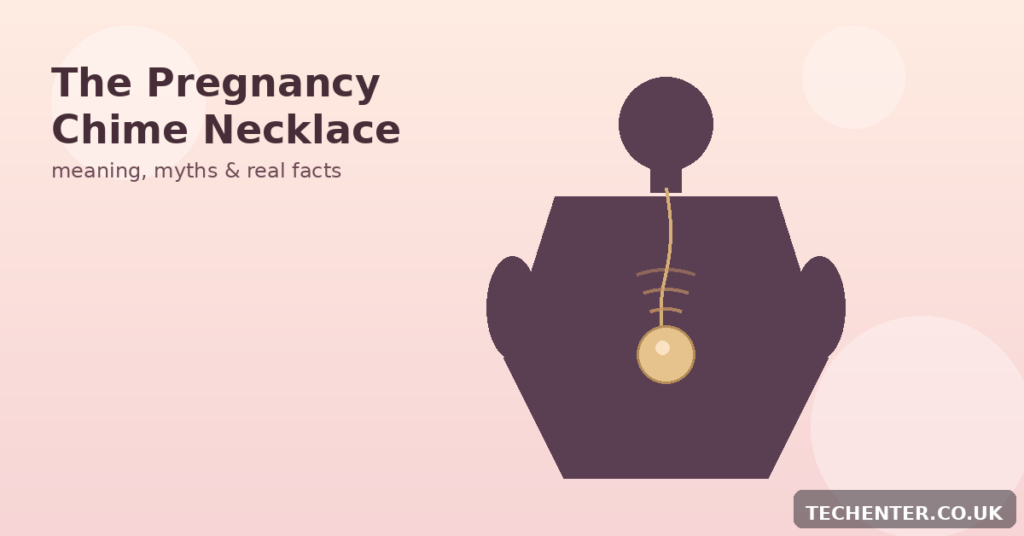

I first noticed one of these necklaces on a friend at her baby shower — a small silver sphere hanging low over her bump. When she moved, it made the softest little chime. I was curious right away.
Turns out this necklace has a few names depending on where you look: pregnancy chime, harmony ball, bola necklace, or — in some corners of the internet — “babybelletje,” which borrows from the Dutch word belletje, meaning “little bell.”
I’ll be upfront: “babybelletje” isn’t an official or widely recognized term. It shows up mostly in scattered blog posts, not in dictionaries or established maternity brands. The necklace itself, though, is real, and it has a genuinely interesting history. So let’s focus on that.
What Is a Pregnancy Chime Necklace?
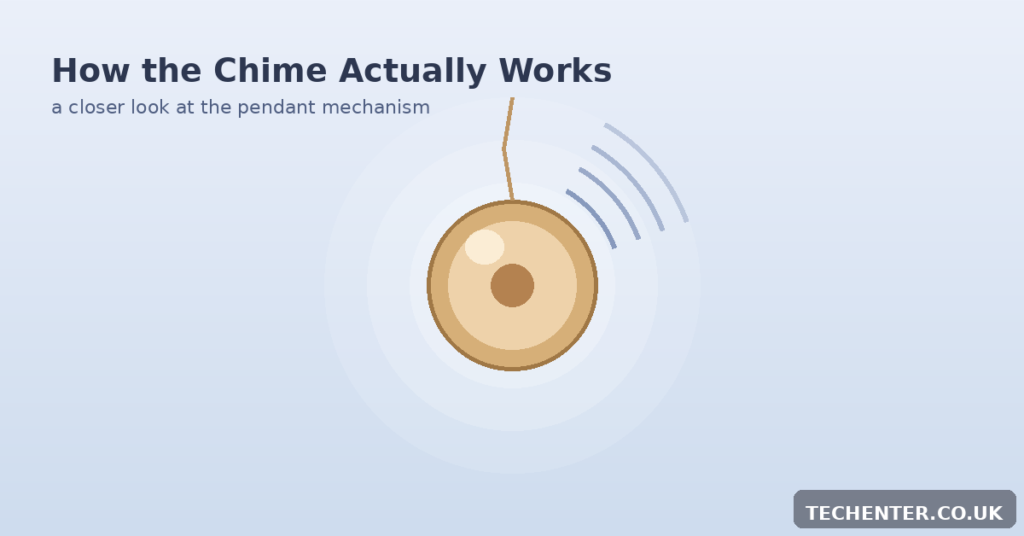
A pregnancy chime necklace is a pendant with a small ball or chime mechanism inside a hollow sphere. It’s worn on a long cord or chain, positioned so the pendant rests low over the belly.
As the wearer moves, the pendant sways gently and makes a soft, muffled ringing sound. It’s meant to sit low enough that the sound can (at least in theory) reach the baby.
Where Does It Come From?
The necklace has real cultural roots, though the exact origin story varies by region and retailer:
- The Mexican “bola” or “llamador de ángeles” (angel caller) is the version most commonly cited by maternity jewelry sellers, tied to Mexican folk tradition.
- Harmony balls from Bali and other parts of Southeast Asia are a similar concept — chiming pendants historically worn for calm and wellbeing, not exclusively during pregnancy.
I want to be honest here: a lot of the “ancient tradition” language you’ll see on shopping sites is more marketing than verified history. The necklaces are real and the general folk tradition is real, but I couldn’t confirm hard historical details like exact centuries or specific tribal customs, so I’m not going to state those as fact.
Can a Baby Actually Hear It?
This part is genuinely interesting, and it’s grounded in real prenatal development research — though I want to be careful about exact numbers I can’t verify.
What’s well established: a baby’s hearing starts developing in the second trimester and continues improving through the third. By the third trimester, babies can respond to sounds from outside the womb, especially the mother’s voice and other low, rhythmic sounds.
Whether a specific necklace chime is loud enough or the right frequency to reliably reach the baby isn’t something I found solid clinical research on. If you’re curious about fetal hearing development specifically, your OB or a source like the American Pregnancy Association is a better bet than a jewelry blog.
Why People Like Wearing One
Setting the science questions aside, here’s why I think these necklaces have genuinely stuck around:
- It’s a small daily ritual. Pregnancy is full of appointments and to-do lists. A necklace that chimes when you move is a nice little nudge to pause and notice your bump.
- It doubles as a keepsake. Many people keep wearing it (or shorten the chain) after birth, so it becomes a memory piece from the pregnancy.
- It’s a popular, personal-feeling gift. For baby showers, it feels more thoughtful than a generic gift card.
- Some parents use the same chime sound to soothe the baby after birth, on the theory that a familiar sound is comforting. This is anecdotal, not clinically proven, but plenty of parents say it works for them.
How to Choose and Wear One
If you want to try one, here’s a simple, practical approach:
- Pick skin-safe materials — nickel-free silver, brass, or stainless steel, especially since pregnancy skin can be more sensitive.
- Get a long enough chain — most are designed in the 30–45 inch range so the pendant naturally rests over the belly, but check the specific product, since this varies by design.
- Look for an adjustable length so you can reposition it as your bump grows.
- Wear it when it’s comfortable for you — there’s no required schedule; some people wear it daily, others just for special moments.
- After birth, some parents shorten the chain to wear during feeding, or retire it as a keepsake. Always keep small pendants and loose cords away from an unattended baby.
My Honest Take
A friend gave me one of these for my second pregnancy, and I’ll admit — I mostly wore it because it felt pretty, not because I was sure my baby could hear it clearly through my belly. But there was something nice about having a small, quiet object tied to that specific chapter. I still have it in a drawer, and every so often I pick it up, and it takes me right back.
I think that’s the real appeal, honestly — less “scientifically proven bonding tool” and more “meaningful object that marks a season of life.” Both are valid reasons to like something.
A Quick Note on “Babybelletje” Specifically
If you searched “babybelletje” and landed here, it’s worth knowing that a handful of blog posts use this term to describe totally different things — a necklace, a baby name, a snack, a “trending word.” That’s usually a sign of recycled or invented content rather than one consistent, real term. The necklace itself is real and worth learning about; the specific word “babybelletje” is not something I’d treat as an established name for it.
FAQ
Is a Babybel cheese snack related to this necklace? No. The name similarity is a coincidence — Babybel is a French cheese brand, unrelated to pregnancy necklaces.
When do people usually start wearing one? Most commonly during the second or third trimester, but there’s no strict rule.
Is there scientific proof the chime soothes babies after birth? Not solid clinical proof — mostly anecdotal reports from parents. It’s a nice idea, not a guaranteed effect.
Wrapping Up
The pregnancy chime necklace is a real, sweet tradition with genuine roots — even if the specific word “babybelletje” is more internet trend than established term. Whether you wear one for the ritual, the keepsake value, or just because it’s pretty, that’s a good enough reason on its own.
Have you worn one of these during pregnancy? Tell me about it in the comments, and share this with an expecting friend who might like one.
For more information, please visit: Techenter.co.uk