

I’ll be honest. The first time I tried tahini, I almost gave up on it.
It was bitter, it was runny, and it looked nothing like the smooth peanut butter I grew up with. But once I learned how to actually use tahini, it became one of my favorite pantry staples.
If you’ve ever wondered what tahini is, whether it’s healthy, or how to use it without wasting a jar, you’re in the right place. This guide covers everything about tahini — from its nutrition facts to simple recipes you can try tonight. No fluff, just the stuff I wish someone had told me sooner.
What Is Tahini, Exactly?
Tahini is a smooth paste made from ground sesame seeds. That’s it. No secret ingredients, no weird additives (unless the brand adds them).
It’s been a staple in Middle Eastern and Mediterranean cooking for centuries. You’ll find it in hummus, baba ghanoush, and countless sauces and dressings.
There are two main types worth knowing:
- Hulled tahini – made from sesame seeds with the outer shell removed. It’s smoother and milder in taste.
- Unhulled tahini – made from whole sesame seeds. It’s a bit more bitter but packs more fiber and nutrients.
I usually go for hulled tahini for sauces and unhulled for baking, but that’s just personal preference.
Tahini Nutrition: What’s Actually in the Jar
Let’s talk numbers, because this is where tahini really shines.
According to USDA data, one tablespoon of tahini (about 15 grams) has around 89 calories, 2.6 grams of protein, 8.1 grams of fat, 3.2 grams of carbs, and 1.4 grams of fiber. It’s also a good source of copper, manganese, calcium, and iron.
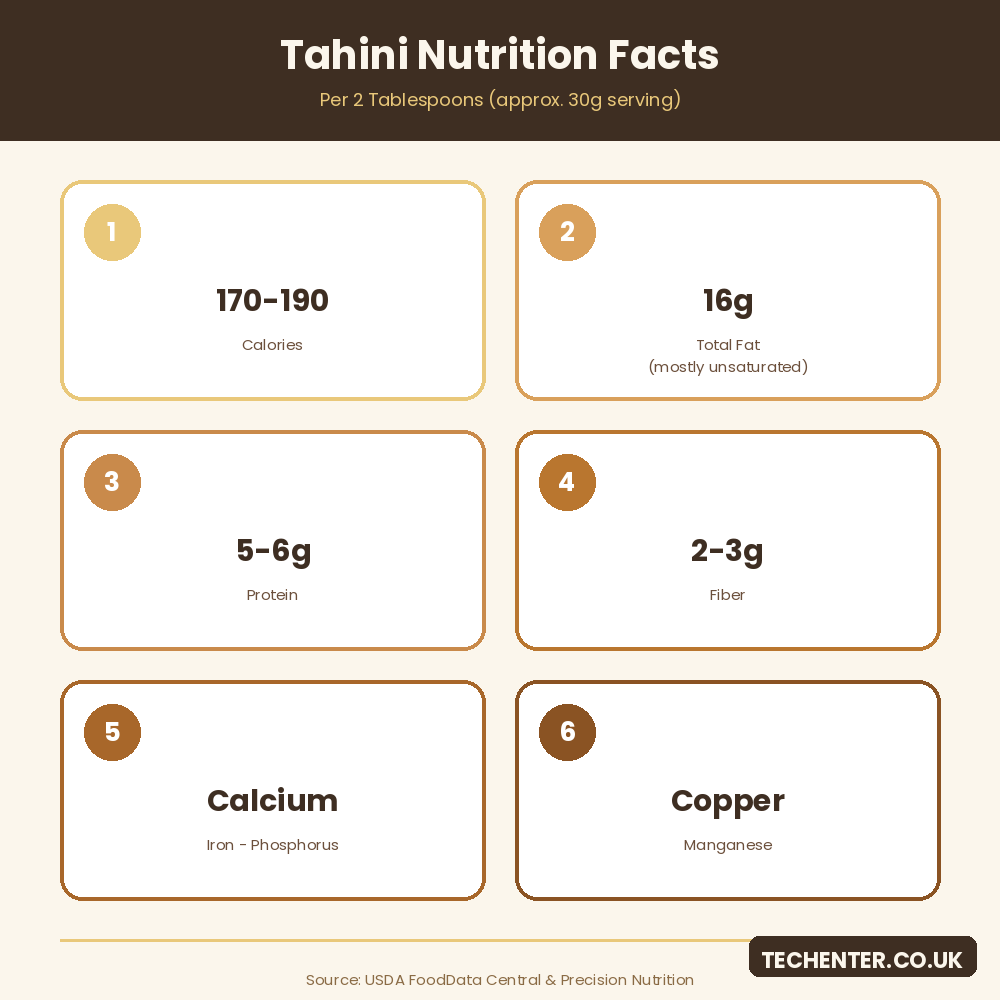
Here’s a quick breakdown per 2-tablespoon serving (roughly 30g):
- Calories: around 170–190 (varies by brand)
- Fat: mostly heart-healthy unsaturated fats
- Protein: about 5–6 grams
- Fiber: 2–3 grams
- Minerals: calcium, iron, phosphorus, and copper
One thing that surprised me: only about 2 of the 16 grams of fat in a 2-tablespoon serving are saturated, with the rest being mono- and polyunsaturated fats. Those are the “good” fats that support heart health, not the kind you need to worry about.
Tahini vs. Peanut Butter
If you’re comparing tahini to peanut butter, here’s the short version. Tahini tends to have fewer carbs and no added sugar, plus it brings unique plant compounds called sesamin and sesamol that peanut butter simply doesn’t have.
That said, peanut butter usually has a bit more protein per serving. Neither one is “better” across the board — it really depends on what you’re after.
Related read: Peanut Butter vs. Almond Butter: Which One Wins? (internal link placeholder)
Health Benefits of Tahini
This is the part that got me hooked on tahini in the first place. It’s not just tasty — it’s genuinely good for you.
1. May Support Heart Health
Sesame seeds have been linked to lower LDL (bad) cholesterol and healthier blood pressure levels. A 2014 study found that people who ate about 1.5 tablespoons of sesame seeds daily saw meaningful drops in triglycerides and LDL cholesterol compared to a control group.
That’s a small daily habit with a pretty solid payoff.
2. Packed With Antioxidants
Sesame seeds contain natural compounds called lignans, including sesamin and sesamol. Researchers have found lower levels of inflammatory markers in people who regularly eat sesame products. Less inflammation, generally speaking, is a good thing for long-term health.
3. Good for Bone Health
Tahini brings calcium, phosphorus, and magnesium to the table — all minerals your bones rely on. If you’re cutting back on dairy, tahini is a nice way to fill in some of that gap.
4. Plant-Based Protein Source
For anyone eating more plant-based meals, tahini adds a decent protein boost without any cholesterol. It’s an easy way to make a meal more filling.
5. May Help Manage Blood Pressure
Some research has connected sesame intake with modest improvements in both systolic and diastolic blood pressure. It’s not a miracle fix, but every small win counts.
Related read: 10 Plant-Based Proteins You’re Probably Not Eating Enough Of (internal link placeholder)
How to Use Tahini in Everyday Cooking
Okay, here’s the fun part. Tahini is way more versatile than most people realize.
Savory Uses
- Stir it into hummus (obviously)
- Whisk it with lemon juice, garlic, and water for a quick tahini sauce
- Drizzle it over roasted vegetables
- Use it as a base for salad dressings
- Spread it on toast with a pinch of sea salt
Sweet Uses
- Swap it for peanut butter in cookies or brownies
- Blend it into smoothies for a nutty flavor
- Drizzle it over pancakes or oatmeal with honey
- Mix it into energy balls with dates and oats
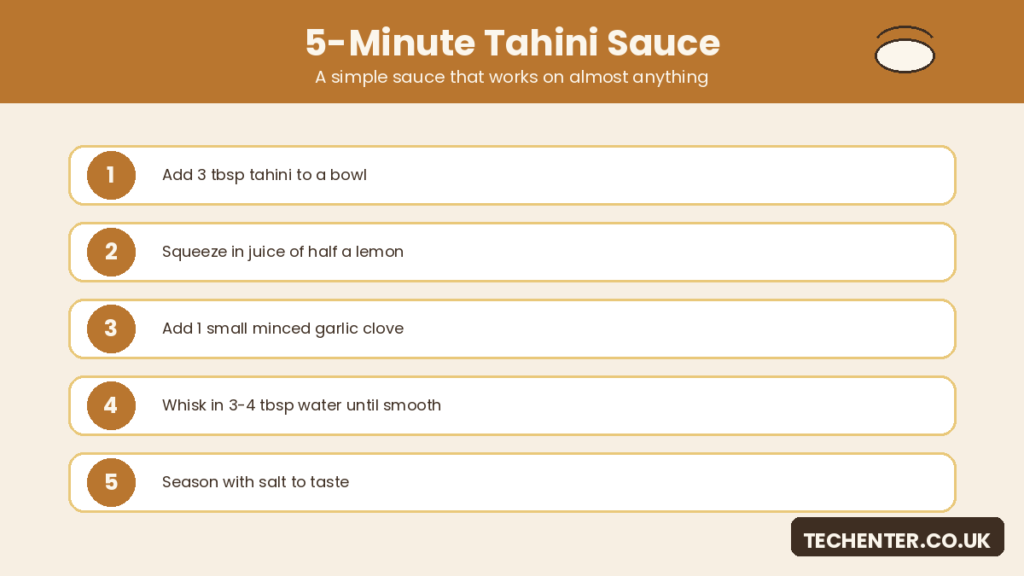
A Simple 5-Minute Tahini Sauce
Here’s the recipe I make almost every week:
- Add 3 tablespoons of tahini to a bowl.
- Squeeze in the juice of half a lemon.
- Add 1 small clove of minced garlic.
- Slowly whisk in 3–4 tablespoons of water until smooth.
- Season with salt to taste.
It sounds too simple to be good, but trust me, it works on almost anything — grain bowls, roasted chicken, falafel, even plain rice.
Related read: 5 Easy Sauces That Make Any Vegetable Taste Amazing (internal link placeholder)
How to Store Tahini (So It Doesn’t Go to Waste)
Tahini separates naturally, with the oil rising to the top. That’s completely normal, not a sign it’s gone bad.
A few quick tips:
- Stir it well before each use.
- Store unopened jars in a cool, dry pantry.
- Once opened, keep it in the fridge to extend freshness.
- Store it upside down occasionally to make stirring easier next time.
If it smells sour or tastes distinctly bitter and off, that’s when it’s time to toss it.
Possible Downsides to Keep in Mind
Tahini isn’t perfect for everyone. A few things worth knowing:
- It’s calorie-dense, so portion size matters if you’re watching your intake.
- Sesame is one of the major food allergens, so it’s not safe for anyone with a sesame allergy.
- Some people with tree nut allergies also react to sesame, so caution is wise if that applies to you.
As with most foods, moderation is the name of the game.
Frequently Asked Questions
Is tahini healthy for weight loss? It can fit into a weight-loss plan, but portion control matters since it’s fairly calorie-dense.
Can I use tahini if I’m allergic to peanuts? Usually yes, since tahini is sesame-based, not a nut product. Still, always check with your doctor if you have serious allergies.
Does tahini need to be refrigerated? Not before opening, but refrigeration after opening helps it stay fresh longer.
What does tahini taste like? Nutty, a little bitter, and slightly earthy. It mellows out nicely when mixed with lemon and garlic.
Final Thoughts
Tahini went from “why does everyone love this weird paste” to a permanent fixture in my kitchen. It’s packed with healthy fats, minerals, and antioxidants, and it’s honestly one of the easiest ingredients to work into meals you already make.
If you haven’t tried it yet, grab a small jar and start with that 5-minute sauce recipe above. I think you’ll be surprised.
Have you tried tahini before? Drop a comment below and let me know your favorite way to use it — and if you found this guide helpful, share it with a friend who needs more tahini in their life.
For more information, please visit: Techenter.co.uk