

So you Googled “what is Innøve” and landed on five different sites that all say almost the exact same thing. Weird, right?
I noticed it too. And once I started digging, I realized Innøve isn’t a company, a platform, or a real philosophy at all. It’s a made-up word that a handful of low-quality blogs are using to game search results.
I want to walk you through what I found, because it’s a great example of a bigger problem happening across the internet right now: AI-written “explainer” articles built around words that don’t actually mean anything.
What Does “Innøve” Actually Mean?
Here’s the funny part. “Innøve” is a real word — just not in English.
It’s Norwegian, and it’s a fairly old-fashioned verb that means to drill or train someone in a skill, like practicing a routine until it sticks. That’s it. It has nothing to do with business strategy, innovation frameworks, or personal growth.
But if you search “Innøve” today, you won’t find that dictionary meaning on the first page. Instead, you’ll find a wave of blog posts claiming it’s a bold new concept that blends “innovation” and “evolution” into a mindset for business, education, and self-improvement.
None of that is true. There’s no origin story, no founder, no research behind it. It was invented for content.

The Copy-Paste Pattern Gives It Away
When I checked a handful of these “Innøve” articles side by side, the pattern jumped out immediately.
They all:
- Use the same definition (“innovation” + “evolution”)
- Break the topic into nearly identical sections (meaning, philosophy, business use, education use, “why it matters,” future outlook)
- Lean on the same vague, feel-good language about “growth,” “adaptability,” and “continuous improvement”
- Never link to a founder, a company, a book, or any actual source
That’s not a coincidence. That’s the fingerprint of AI-generated content being pushed out across multiple low-authority sites, all targeting the same invented keyword.
I’ll be honest — the first time I ran into this pattern on a different fake term a while back, I almost didn’t catch it either. The writing sounds confident and polished, which is exactly what makes it convincing at a glance.
How This Kind of SEO Spam Actually Works
This isn’t random. It’s a strategy, and it’s a pretty simple one once you see it laid out.
- Invent a term that sounds modern and brandable (bonus points for a Scandinavian-looking letter like ø — it reads as sleek and “designy”).
- Generate several articles about it using AI, each slightly reworded, and publish them on different low-authority blogs or magazines.
- Interlink and repeat the keyword so search engines start associating the term with “real” search demand.
- Wait for curious searchers to type the word in, since there’s no competing authoritative source to outrank.
- Monetize the traffic with ads, affiliate links, or by selling the sites themselves once they’ve built up some traffic history.
Because nobody else is writing about a fake word, these sites don’t need to beat The New York Times or Wikipedia. They just need to beat each other — and since they’re all copying the same shallow structure, that’s not hard.
How to Spot This Kind of Content Yourself
I run into new “trending” buzzwords all the time now, and I’ve started using a quick mental checklist before I trust one. It works for “Innøve,” and it’ll work for the next made-up word too.
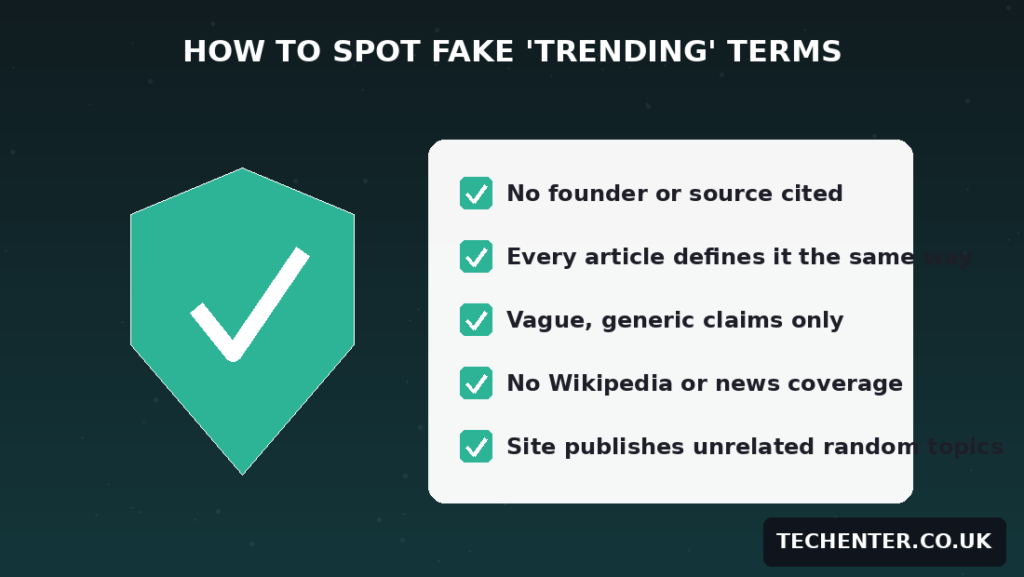
- Search the term plus “wikipedia” or “founder.” Real concepts have a paper trail. Fake ones don’t.
- Check if every article “explains” it the same way. Genuine ideas get debated, criticized, and built on. Copy-paste definitions are a red flag.
- Look for a name behind it. No author, no company, no original source? Be skeptical.
- Notice the vagueness. Real frameworks give specifics — steps, data, named examples. Spam content stays fuzzy on purpose because there’s nothing underneath it.
- Check the site itself. Does it publish on wildly unrelated topics with the same generic “magazine” branding? That’s often a content farm, not a publication with a real editorial focus.
Why This Actually Matters
It’s tempting to shrug this off as harmless clickbait. I get it — nobody’s getting hurt by a fake self-help word.
But this pattern scales. The same playbook gets used for fake health claims, fake financial “strategies,” and fake product reviews. If you can’t tell a manufactured concept from a real one, you’re also more exposed to manufactured advice in areas where it actually matters.
It also chips away at search results generally. Every fake-concept farm that ranks pushes a genuinely useful page further down, which makes the whole internet a little worse to search.
The Bottom Line
“Innøve” isn’t a business philosophy, a platform, or a movement. It’s an old Norwegian verb that got repurposed as bait for an AI content farm, and it’s currently ranking because nothing else exists to compete with it.
If you came here looking for a real productivity or innovation framework, you might actually want something with a track record — like Kaizen and continuous improvement (our related guide), or how to build a genuine innovation process at work (internal link placeholder). We’ve also got a breakdown of other AI-generated buzzwords currently trending if you want to keep pulling this thread.
Have you run into other fake “trending” terms like this one? Drop it in the comments — I’d genuinely like to add it to the list. And if this saved you from citing a made-up concept in a report or a client pitch, share it with whoever needs to see it.